
Introducing: Āhuru Knitwear
Posted:

There's a quiet sense of momentum behind Āhuru as it joins The Shelter - a moment that feels both earned and entirely natural. After winning the Fashion Quarterly Awards Emerging Designer of the Year in 2025, the brand steps into The Shelter under a six-month 'Shelter Scholarship', including dedicated rack space and ongoing mentorship with Creative Director Vicki Taylor.
"It can be incredibly hard to distil a brand into a few short paragraphs for an award submission," says Vicki. "What stood out with Āhuru was the depth - there's a real sense of heart in designer Nat Robb's work, and a clarity in how she connects with her community. You can feel that this is something people will return to and grow with. I'm excited to work alongside her - not only to support the evolution of the brand, but to help carry forward the generational knowledge that sits at the centre of her practice. It brings a rare and meaningful dimension to New Zealand fashion." - Vicki Taylor
The debut ĀHURU collection moves between heirloom textile works and the knitwear Nat Robb has always made, grounded in the full journey of fibre from fleece to finished piece. It is a shared process with the wāhine of the Te Māhia craft group, who source fleece, have it carded, and spin it into yarn before it returns to Nat to be dyed, woven, or knitted. It’s a process shaped by many hands, and by the knowledge they have passed on - in weaving, dyeing, and working with fibre. Across both wall pieces and garments, each piece is made slowly, carrying the marks of shared knowledge and process.
The heirloom works are designed to be lived with - hung as textile pieces that shift with light and space - while the garments extend this same process into something worn. Alongside these sit the knitwear pieces that have long defined the practice — including the return of the Marlon cardigan and the balaclavas — now joined by a new body of homespun work that moves closer to the heirloom space through its process and time.
Founder Natalie Robb - known to many as Nat - didn't set out to build a brand in the traditional sense. The story begins at home, watching her brother knit beside her. Something about the act caught hold. What followed wasn't immediate ambition, but a slow unfolding. Shared experiments, pieces made for friends, and learning the traditions of her craft. Demand grew organically, almost unintentionally, until the work began to take on a life of its own.
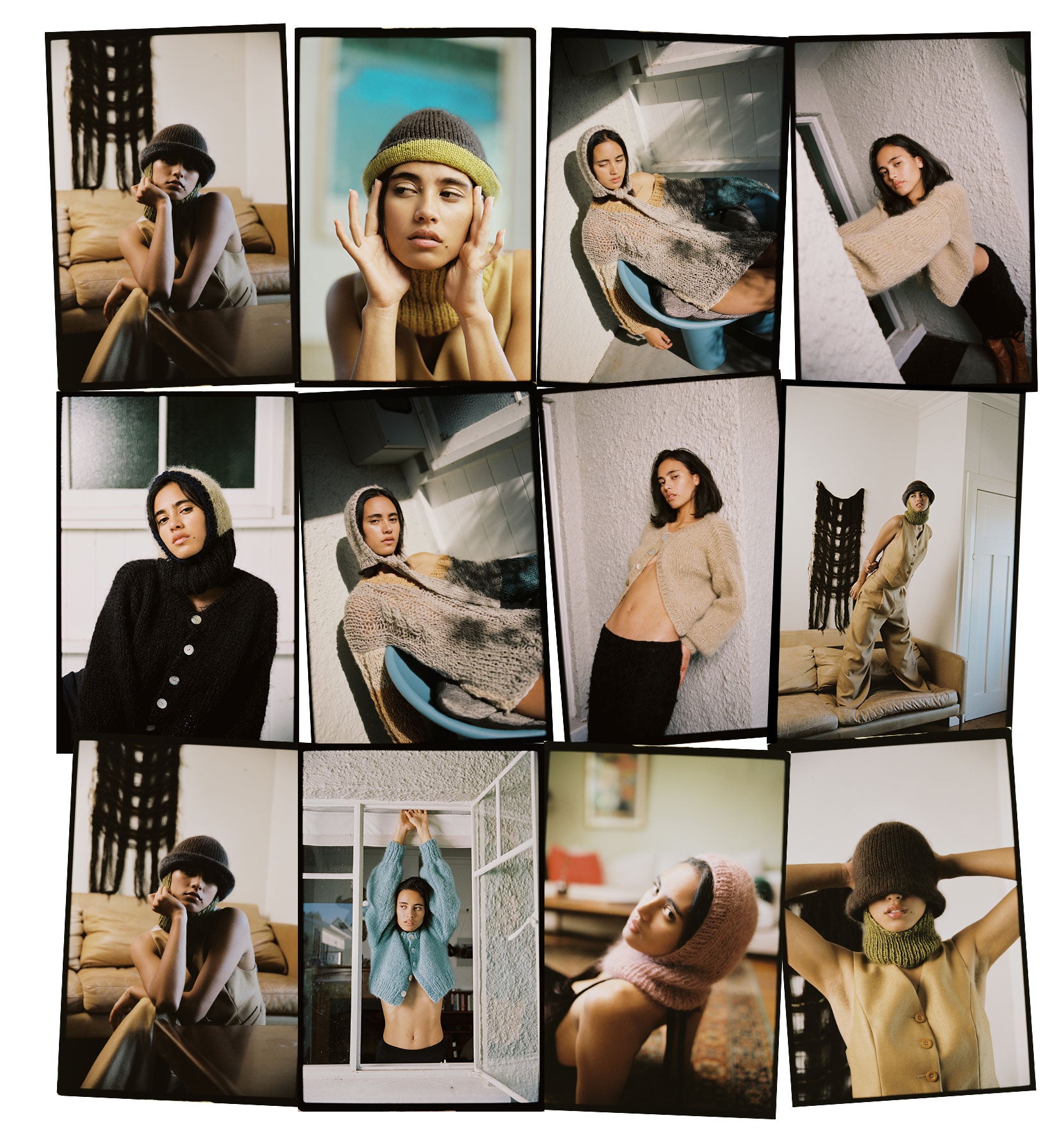
Āhuru emerged from a small series of instinctive decisions.
"ĀHURU began at home. My brother was knitting a blanket, my māmā was crocheting bags for the whānau, and I wanted to be part of that rhythm - to make something of my own. Once I started, I couldn’t stop. Knitting quickly became an obsession. I spent every spare minute with needles in hand, learning, messing up, and slowly getting better. One of my nearest and dearest trusted me to make her a jumper - even though I’d never made one - and from that act of faith came everything that followed. That same spirit continues here, but the practice has deepened. This work now moves between knitwear and heirloom textile pieces, grounded in the full journey of fibre from fleece to finished piece. It is a shared process with the wāhine of the Te Māhia craft group - sourcing fleece, having it carded, and spinning it into yarn before it returns to me to be dyed, woven, or knitted. Along the way, they have passed on knowledge in weaving, dyeing, and working with fibre, shaping how I make.
The garments remain at the heart - including the knits that have always defined this practice, like the Marlon cardigan and balaclavas - now sitting alongside a new body of homespun work that carries this process more fully. Each piece is made slowly, shaped by many hands, and grounded in connection to place.
Made by hand, in small quantities, for every body. Ka nui te mihi to each of you who wear these pieces and carry their stories forward." - Nat Robb.
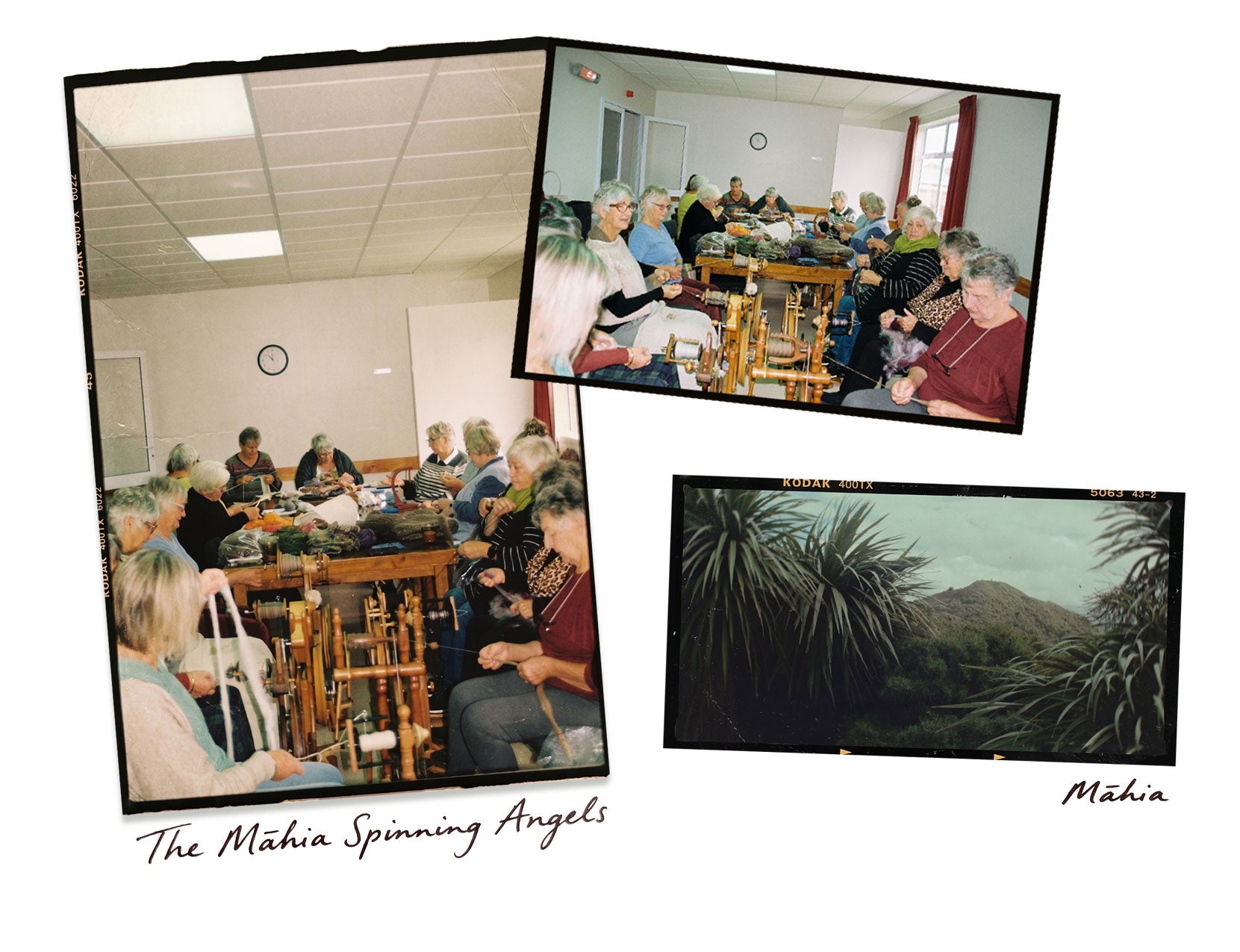
The brand's foundation is deeply tied to place. In Māhia, on the East Coast of New Zealand, Nat found herself within a community of makers - women she affectionately calls her "angels". Retired farmers, each carrying decades of knowledge passed down through generations, they gather around craft in its most honest form. Spinning, knitting, sharing stories - a rhythm of making that exists outside of fashion cycles. It's here that Āhuru found its grounding.
Each Āhuru garment carries that same sense of closeness in its making. Yarn is hand-spun, fibres are hand-dyed, and every piece is slowly brought to life by a small community of makers connected to Nat — many of them the very women who first welcomed her into this world. There is no separation between process and product here; each stage is held with care, shaped by human hands rather than machines. It’s a way of working that prioritises time, touch, and connection — where the finished garment holds not just warmth, but the presence of those who made it.
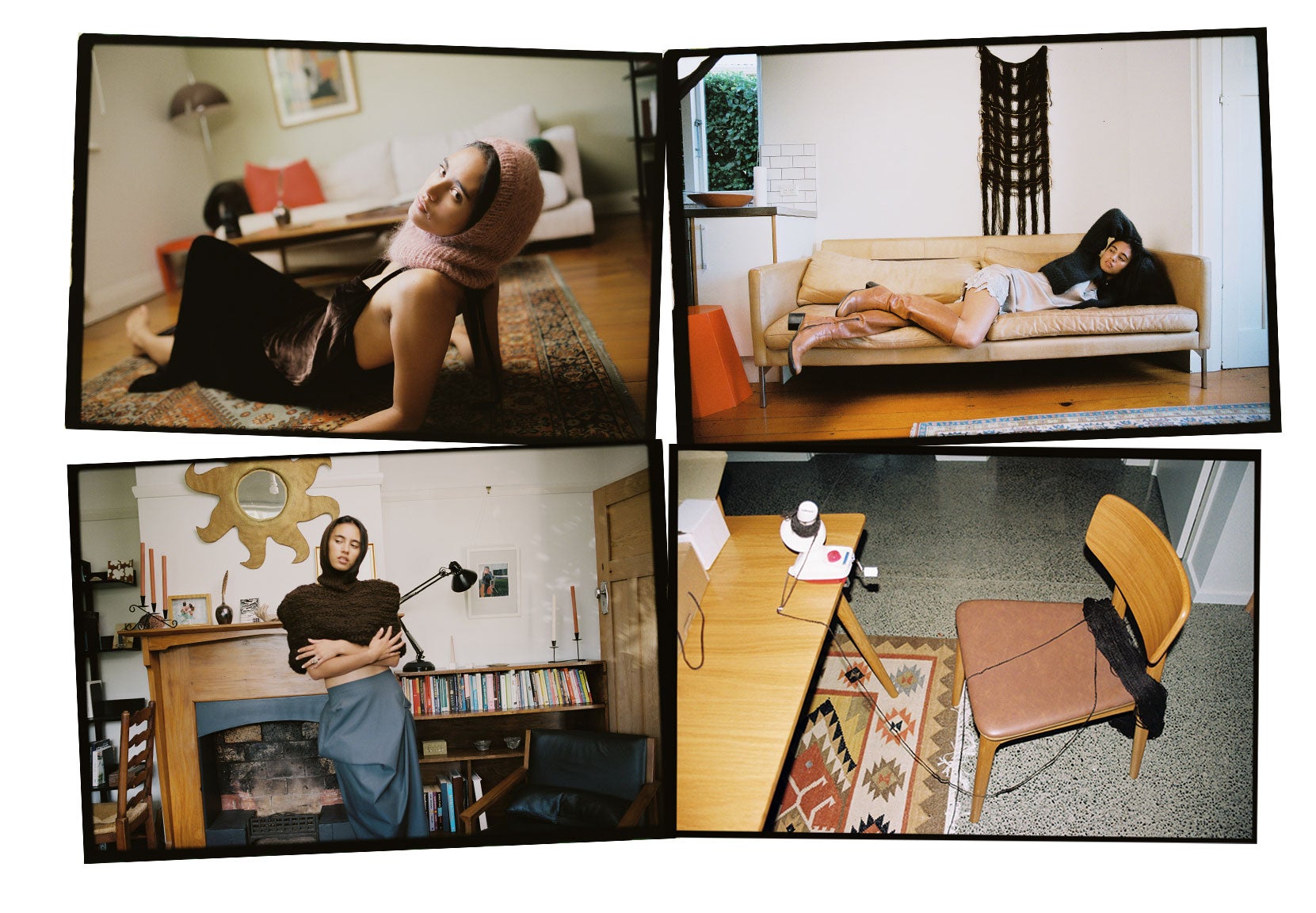
Today, that approach remains intact. Each piece is made to order, allowing time and care to sit within the process. There's an intimacy to the work - a sense that the maker is present in every garment.
Āhuru, a te reo Māori word meaning to be cost, comfortable, and word, feels less like a label and more like a way of being. The name itself is drawn from Nat's Māhia home, where it sits inscribed above the fireplace - a quiet anchor to the values that shape the brand.
At The Shelter, Āhuru finds a natural alignment - a space that values process as much as product, and where stories of making are held alongside the garments themselves. As the brand steps into this next chapter, it does so with a sense of continuity - honouring what has come before, while gently shaping what comes next.

Formerly known as Amélie, the label’s evolution into Āhuru marks a transformative chapter.
While rooted in the whenua of Māhia, Nat has delved further into the whenua (land), experimenting with natural dyes sourced from native kawakawa, pōhutukawa, and harakeke. Each garment is more than just wool; it is a collective mission. The yarn is hand-spun by Nat’s "angels" in Māhia: Barb, Mau, Annette, and Sue. Using fleeces sourced from the farms of local family and friends. Every piece is considered, made-to-order, and held within the meaning of its name.